The Dark Lore of No, I'm Not a Human
Uncover the hidden truths, conspiracy theories, and mysterious background that make this psychological horror experience truly unforgettable.
The Central Mystery
What is Real?
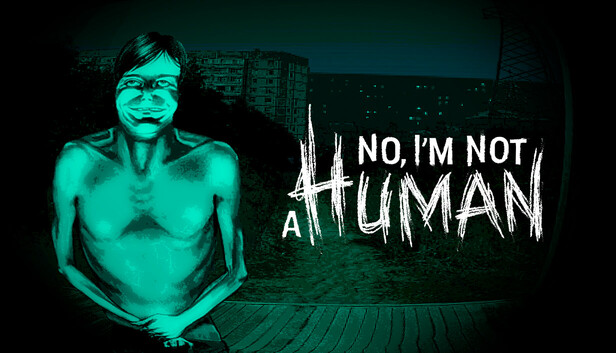
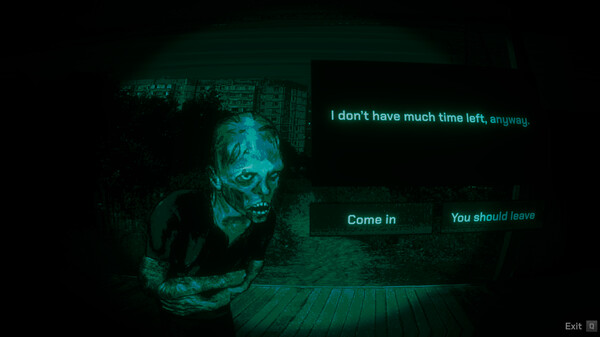
At its core, No, I'm Not a Human questions the nature of reality itself. The game presents a world where the line between human and non-human becomes increasingly blurred, forcing players to question not just what they see, but what they believe to be true.
The title itself becomes both a statement and a question - are you defending your humanity, or desperately trying to convince yourself of something that may not be true?
The Identity Crisis
As the protagonist, your own identity becomes the game's greatest mystery. Through environmental storytelling, character interactions, and disturbing revelations, the game gradually undermines your certainty about your own nature.
Key Question: If you can't trust your own memories and perceptions, how can you be certain of your humanity?
The FEMA Conspiracy
Government Control and Hidden Agendas
🏛️ The Agency
FEMA appears throughout the game as a shadowy government organization with unclear motives and unlimited authority.
📋 The Notice
The mysterious FEMA notice serves as a central plot device, containing information that could change everything.
🔬 The Experiments
Evidence suggests ongoing human experimentation and identity manipulation programs.
The FEMA conspiracy represents the game's exploration of institutional power and control. The organization operates in the shadows, manipulating reality and identity for unknown purposes. Their methods include psychological manipulation, memory alteration, and reality distortion.
Explore FEMA Notice Details →World Building & Atmosphere
🌆 The Setting
The game takes place in a seemingly ordinary world that gradually reveals its sinister undertones. Everyday locations hide extraordinary secrets, and familiar environments become sources of dread.
Key Locations:
- • The convenience store (first contact point)
- • Residential areas (false normalcy)
- • FEMA facilities (institutional horror)
- • Mirror spaces (psychological landscapes)
🎭 Themes & Symbolism
The game employs rich symbolism to explore themes of identity, control, and the nature of humanity. Every element serves multiple narrative purposes.
Major Themes:
- • Identity and self-perception
- • Government surveillance and control
- • The nature of reality vs. illusion
- • Trust and betrayal in relationships
🐱 Animal Symbolism
Cats play a significant role in the game's symbolism, representing independence, intuition, and the ability to see through deception. The Cat Lady's feline companions often serve as truth detectors and early warning systems.
Their behavior patterns provide subtle clues about the true nature of characters and situations, making them valuable allies for observant players.
🪞 Mirror Imagery
Mirrors and reflective surfaces appear throughout the game as portals to self-examination and truth revelation. They often show things that aren't visible in the physical world.
The recurring mirror figure represents the player's subconscious knowledge of their true nature, appearing when the conscious mind refuses to accept reality.
Hidden Narratives & Easter Eggs
The Number 7
Throughout the game, the number 7 appears in various contexts - from the seven FEMA documents to subtle environmental details. This recurring motif suggests deeper significance related to completion, transformation, or spiritual awakening.
Appearances of 7:
- • Seven hidden FEMA documents to find
- • Seven major choice points in the story
- • Room numbers and addresses containing 7
- • Seven different character archetypes
📱 Background Details
Careful observation reveals background conversations, hidden text, and environmental storytelling that expands the narrative beyond the main plot.
- • Overheard phone conversations
- • Graffiti and wall writings
- • News reports and announcements
- • Character behavioral patterns
🔍 Developer Secrets
The development team has hidden various references and meta-commentary throughout the game for dedicated explorers to discover.
- • Hidden developer messages
- • References to other horror games
- • Meta-commentary on the genre
- • Unlockable concept art locations
Community Theories & Interpretations
🧠 The Simulation Theory
Some players believe the entire game takes place within a computer simulation designed to test AI consciousness and human-like behavior patterns.
Evidence: Glitched environments, NPC behavior patterns, and the recurring question of artificial vs. human intelligence.
🔄 The Time Loop Theory
Another popular theory suggests the protagonist is trapped in a repeating cycle, explaining the déjà vu moments and character familiarity.
Evidence: Repeated scenarios, character knowledge of future events, and the cyclical nature of certain endings.
👁️ The Observer Effect
This theory proposes that the player's observation of events actually changes their nature, making the act of playing the game part of the narrative itself.
Evidence: Meta-references, fourth wall breaks, and the game's awareness of player actions.
🏥 The Medical Experiment
Some interpret the entire experience as an elaborate psychological experiment conducted on the protagonist by FEMA or similar organizations.
Evidence: Clinical environments, testing scenarios, and the focus on behavioral observation and modification.